
Why Your New Members Are Leaving — And What to Do About It
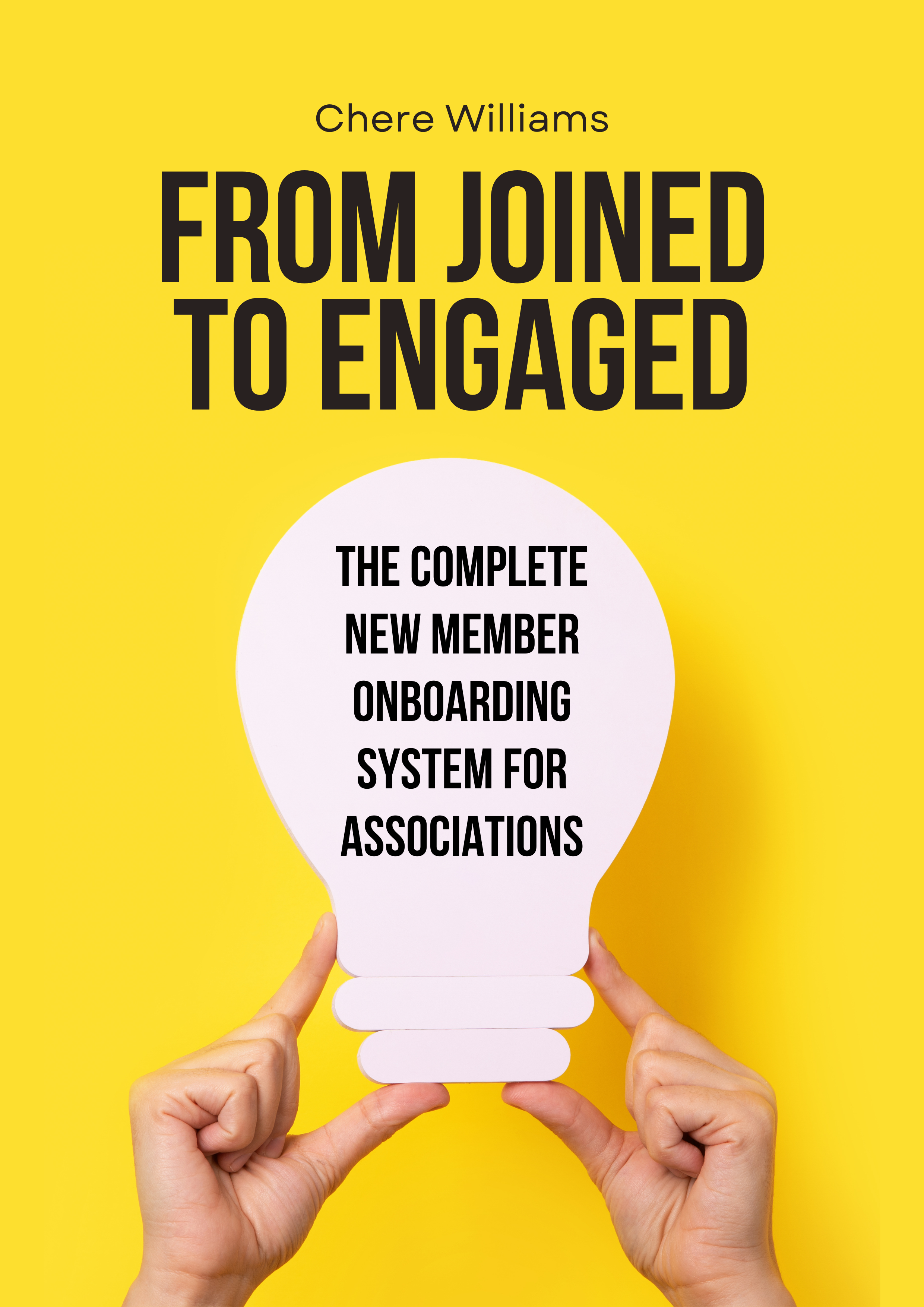
Do You Have a member Renewal Problem! I have a Solution!
Check out my new eBook and Course, From Joined to Engaged: The Complete New Member Onboarding System for Associations
Most associations are solving the wrong membership problem.
When renewal rates are disappointing, when growth feels flat, when the pipeline of engaged volunteers and future leaders feels thin — the default response is almost always the same: we need to recruit more members.
More marketing. A better referral program. A joining incentive. A membership drive.
And none of it moves the renewal number.
Here's why.
The problem isn't at the front door. It's at the window.
Members are coming in — and then quietly leaving through the window before anyone notices. Not with complaints. Not with dramatic resignation letters. Just with a lapse notice, or the quiet absence of a renewal payment, at the end of year one.
And the association, focused on the front door, recruits five new members to replace the four who left — and calls it growth.
Research on first-year member retention consistently shows that somewhere between 40 and 60 percent of new members don't renew after their first year. In some associations that number is higher. In the best-run associations with intentional onboarding systems, it is significantly lower.
The gap between those two outcomes is not explained by the quality of the benefits, the cost of dues, or the prestige of the organization.
It is explained by what happens — or doesn't happen — in the first 90 days of membership.
The 90-Day Decision
There is a window in every new member's first year when their experience with your association is most formative. It opens the moment they join — when their motivation is highest and their decision to invest is freshest — and it closes, in most cases, around the 90-day mark.
Members who engage in those first 90 days — who attend something, connect with someone, access something valuable, and feel certain that joining was the right decision — renew at dramatically higher rates.
Members who don't engage in those first 90 days rarely do.
And by the time the renewal invoice arrives, the decision has usually already been made.
What Most Associations Actually Do
Most associations send a confirmation email when someone joins. Login credentials, a receipt, perhaps a PDF of member benefits. And then the new member's name enters the general communication queue. They start receiving the newsletter. They get event announcements. They might receive a survey in the spring.
But no one has followed up personally. No one has asked them what they hoped to get from membership. No one has introduced them to anyone. No one knows whether they have logged in, attended anything, or experienced a single moment that made them think joining was the right decision.
This is not negligence. It is almost always the result of bandwidth — staff are stretched thin, systems are manual, and onboarding is not treated as a strategic priority because its impact isn't being measured.
But the connection between early engagement and first-year renewal is one of the most well-established patterns in membership management. And once you can see it in your own data, you can't unsee it.
What Deliberate Onboarding Actually Looks Like
A complete new member onboarding system doesn't require a large staff or an enterprise technology platform. It requires five things:
A baseline. You need to know your first-year renewal rate — the number that tells you where you're starting and gives you something to measure against.
A welcome sequence. Not a confirmation email. A deliberate, sequenced 30-day welcome experience with five touchpoints — personal, timed, and designed to make every new member feel seen from day one.
Value activation. A strategy for guiding each new member toward the one experience most likely to create the "this was worth it" moment — quickly, specifically, and personally.
Community connection. A deliberate plan for helping new members form relationships — through ambassadors, first-event preparation, cohort experiences, and online community protocols — because belonging, not benefits, is what drives long-term renewal.
Measurement. The five-engagement metrics, the 30/60/90-day benchmarks, and the feedback loop that tells you whether your system is working and makes it better with every cohort.
When all five are in place, the impact is real. Members feel welcomed in the first week, connected to a community in the first month, and certain that membership has already delivered value before their 90-day mark. And they renew.
It's not complicated. It's just consistent.
The Gap Is an Opportunity
The gap between where your first-year renewal rate is and where it could be is not a failure. It is an opportunity — one that most associations haven't yet seized because no one ever built the system to address it.
If your renewal numbers aren't where you want them, the answer is almost certainly not more recruitment. It's a better onboarding experience for the members you're already bringing in.
Start there. The data will follow.
Chere Williams is an Association Management Strategist with more than 20 years of experience helping nonprofits and associations build the systems they need to serve their members well. She is the author of From Joined to Engaged: The Complete New Member Onboarding System for Associations and the creator of the From Joined to Engaged online course.
